
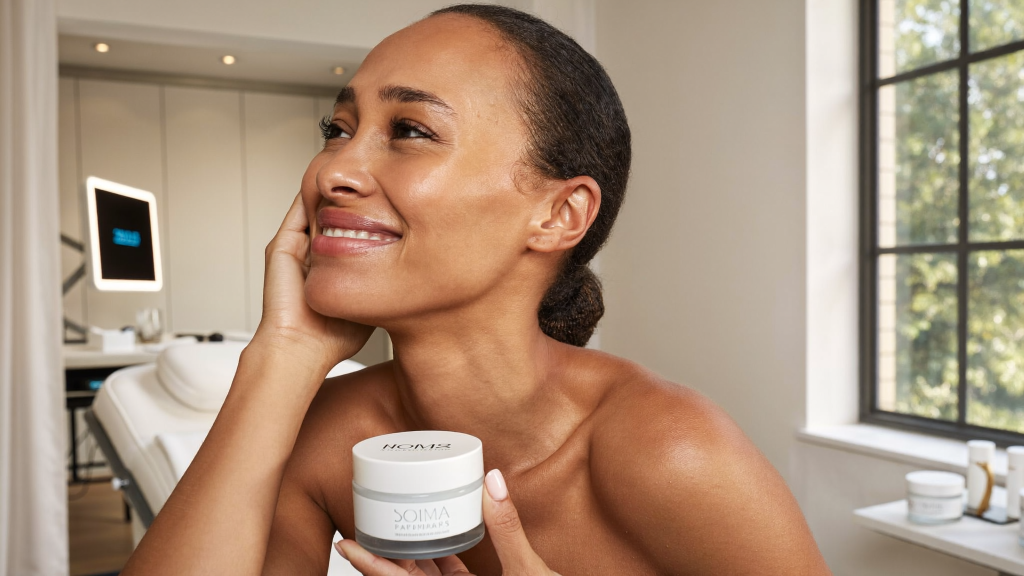
Skin boosters are injectable treatments that hydrate and improve skin quality from within, rather than adding volume or shape the way dermal fillers do. Made from hyaluronic acid, polynucleotides or your own platelet-rich fibrin, they are placed just under the skin in a series of tiny microinjections. Over the following 4 to 6 weeks they stimulate collagen and elastin, leaving skin firmer, smoother and visibly more hydrated. Most people need 2 to 3 sessions, and results typically last around 6 months. If your skin looks tired, dull or crepey but you do not want the added volume of filler, skin boosters are usually the treatment to consider first.
What this guide covers
- What are skin boosters and how do they work?
- What can skin boosters actually improve?
- Which skin booster is right for you?
- What happens during a skin booster treatment?
- Are skin boosters safe?
- Where can I get skin boosters near me?
- Skin booster FAQs
What are skin boosters and how do they work?
A skin booster is an injectable treatment designed to improve the quality of your skin rather than its shape. Instead of being placed deep to sculpt or add volume, the product is delivered in small amounts just beneath the surface across the whole treatment area, most commonly the face, neck, decolletage and hands.
Most skin boosters are based on hyaluronic acid, a molecule your skin produces naturally that holds many times its own weight in water. Injected hyaluronic acid draws moisture into the dermis and signals your skin cells to produce more collagen and elastin. A systematic review published in Clinical, Cosmetic and Investigational Dermatology found that injectable hyaluronic acid significantly improved facial skin hydration, firmness, brightness, texture and elasticity.
Newer regenerative options work differently. Polynucleotides use highly purified DNA fragments to switch on your skin’s own repair processes, while iPRF uses growth factors taken from a small sample of your own blood. All three sit under the skin booster umbrella because the goal is the same: healthier, better hydrated, more resilient skin.
Injectable hydration that firms, smooths and restores glow, tailored to your skin in Bracknell and Alderley Edge.
Book a Consultation →What can skin boosters actually improve?
Skin boosters are at their best when the problem is skin quality rather than lost volume. They are commonly used for dull or tired-looking skin, dehydration lines and crepey texture on the cheeks and neck, rough or uneven texture, and the general loss of bounce that shows up from the late 30s onwards. Many people also use them before big events, because the gradual glow looks natural rather than obviously treated.
What they will not do is restore significant volume loss in the cheeks or temples, lift jowls, or reshape features. If your main concern is hollowing rather than skin quality, a collagen stimulator or filler conversation is more appropriate, and our guide to why the face loses volume after 40 explains that difference in detail.

Which skin booster is right for you?
The right choice depends on your skin, your goals and how your body responds. These are the three main options we offer at SIX1, compared side by side.
| Profhilo | Polynucleotides | iPRF | |
|---|---|---|---|
| What it is | High concentration hyaluronic acid (64 mg per vial) | Purified DNA fragments that trigger skin repair | Growth factors from your own blood |
| Typical sessions | 2, spaced 4 weeks apart | 3, spaced 2 to 4 weeks apart | 3, spaced around 4 weeks apart |
| Best for | Overall hydration, firmness and glow | Repair, under-eye area, sensitive or damaged skin | A fully natural option using your own cells |
| Results appear | 4 to 6 weeks after the second session | Gradually across the course | Gradually over 4 to 8 weeks |
| Typically lasts | Around 6 months | 6 months or more with maintenance | Varies, maintained with top-up sessions |
One of the most concentrated hyaluronic acid treatments available, for skin that looks rested and luminous.
Book a Consultation →Your own platelet-rich fibrin, reinjected to regenerate skin with nothing synthetic involved.
Book a Consultation →What happens during a skin booster treatment?
Your appointment starts with a consultation to assess your skin and agree the right product and plan. The treatment itself takes around 30 minutes. After cleansing and, if needed, a numbing cream, the practitioner places a series of small injections across the treatment area. Profhilo uses just 5 injection points per side of the face, while other boosters use a fine mesh of micro-droplets.
There is little to no downtime. You may see small raised bumps at the injection points, which usually settle within 24 to 48 hours. Most people return to normal activities the same day, avoiding makeup for the rest of the day and heat, saunas and strenuous exercise for 24 hours. Changes build gradually as collagen production increases, which is why the best photos are taken about a month after your final session, not the day after.
Are skin boosters safe?
In trained medical hands, skin boosters have a strong safety profile. Hyaluronic acid is naturally present in your skin, polynucleotides are highly purified and well tolerated, and iPRF comes from your own blood, so there is nothing your body treats as foreign. Common side effects are temporary: redness, small bumps, light swelling or occasional pinpoint bruising at injection sites.
The bigger safety question in the UK is who is injecting, not what is injected. Injectables are not tightly regulated here, so choose a practitioner who is medically qualified, insured and working from a clean clinical environment, and who offers a proper consultation before any treatment is agreed. At SIX1 Aesthetics every treatment starts with a consultation, and we will tell you honestly if a skin booster is not the right choice for your concern.
Where can I get skin boosters near me?
If you are searching for skin boosters near me, SIX1 Aesthetics offers skin booster treatments at our clinics in Bracknell, Berkshire and Alderley Edge, Cheshire. Bracknell is an easy reach from Reading, Wokingham, Ascot and Camberley, while Alderley Edge serves Wilmslow, Macclesfield and the south Manchester area. Book a consultation and we will assess your skin, talk through Profhilo, polynucleotides and iPRF, and build a plan around what your skin actually needs. You can also read our deeper guide to polynucleotides treatment if the regenerative route interests you.
Skin booster FAQs
How long do skin boosters last?
Most hyaluronic acid skin boosters last around 6 months after the initial course, with some people seeing benefits for up to 12 months. A single maintenance session every 6 months or so keeps results consistent.
What is the difference between skin boosters and dermal fillers?
Fillers are thicker gels placed to add volume or shape in a specific spot, like the cheeks or lips. Skin boosters are runnier, spread across a whole area, and improve hydration and skin quality without changing your features.
Do skin booster injections hurt?
Discomfort is mild. The injections are shallow and quick, and numbing cream is available. Most people describe small stings rather than pain.
How quickly will I see results?
Expect a subtle early glow within days, with the full effect building 4 to 6 weeks after your final session as new collagen forms.
Who should not have skin boosters?
They are not suitable during pregnancy or breastfeeding, with active skin infection in the area, or with certain allergies. People with fish allergies should avoid polynucleotides. Your consultation covers all of this before anything is booked.
Ready for skin that looks properly rested?
Book a skin booster consultation and we will build a plan around your skin, whether that is Profhilo, polynucleotides or iPRF.
Book Your Consultation →Bracknell, Berkshire and Alderley Edge, Cheshire. Same-week appointments often available.
