
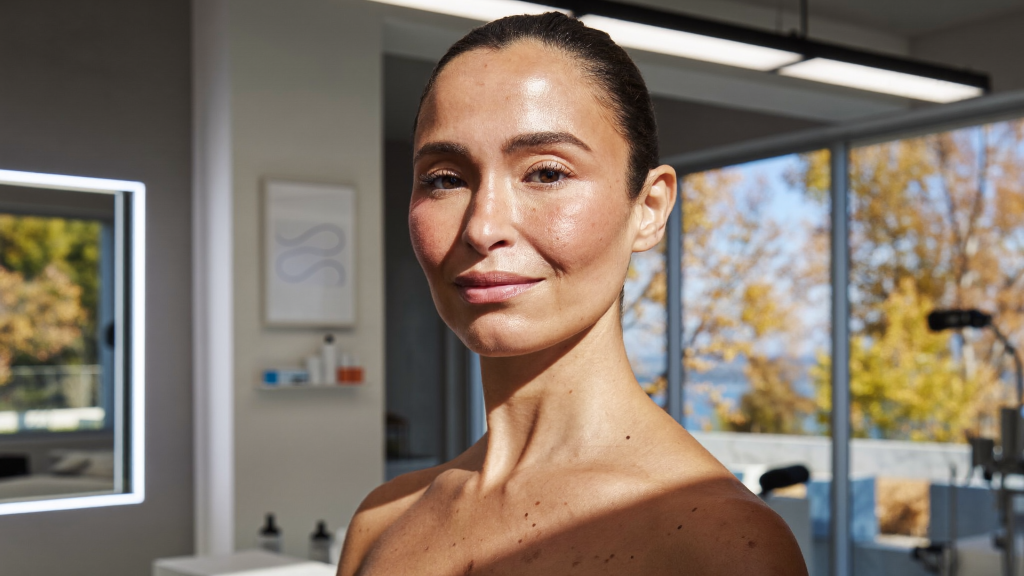
The best time to repair sun-damaged skin is now, in the cooler months, not in December when everyone is rushing before Christmas. After a summer of UV exposure, most people notice more pigmentation, dullness and dehydration. The fix is a steady routine of proven ingredients, sun protection every day, and where needed, a professional treatment or two. Autumn is the ideal window because many of the most effective ingredients make your skin more sensitive to the sun, so starting them when UV is lower gives your skin time to recover and look its best by party season. This guide covers what actually works and what is a waste of your money.
On this page
- What does sun damage do to your skin?
- Why autumn is the right time to fix it
- What actually works on sun-damaged skin
- What is a waste of money
- Worth it vs waste of money
- What about dehydration and dullness?
- When to see a professional
- Sun damage FAQs
What does sun damage do to your skin?
Sunlight contains two types of ultraviolet rays that affect your skin. UVB is the one that burns you. UVA penetrates deeper and is largely responsible for premature ageing and pigmentation. When UV hits your skin, it triggers your cells to produce more melanin, the pigment that causes tanning. Over time this shows up as uneven patches, brown spots and a dull, tired look. UV also breaks down collagen, which is why sun exposure is one of the biggest causes of lines and loss of firmness.
One honest point up front: sun damage cannot be completely reversed. What you can do is fade pigmentation, smooth texture, and stop it getting worse. The results are real, but they come from consistency, not from a single miracle product.
Why autumn is the right time to fix it
Many of the ingredients and treatments that fade pigmentation, such as retinoids and exfoliating acids, make your skin more sensitive to sunlight. Using them through a strong summer often means more irritation and a higher chance of the pigmentation coming straight back. Starting them now, when UV levels are lower, is safer and more effective. It also means your skin has weeks to settle and glow rather than being rushed in December. If party season is your deadline, this is the window to act.

What actually works on sun-damaged skin
You only need a few proven ingredients. These are the ones with real evidence behind them:
- Daily SPF. The single most important step. It protects the progress you make and stops new pigmentation forming. Skip this and everything else is wasted.
- Vitamin C. An antioxidant that brightens the skin and helps defend against further UV damage. Look for a stable form at around 10 to 20 percent.
- Retinoids. Vitamin A derivatives that speed up cell turnover, fade dark spots and rebuild collagen. One of the most effective tools for reversing the look of sun damage.
- Niacinamide. A gentle vitamin B3 that reduces pigment transfer and calms redness. A 2026 study published on PubMed found a niacinamide-containing regimen reduced facial pigmentation severity by 44 percent over 24 weeks.
- Targeted brighteners. Azelaic acid, kojic acid and tranexamic acid interrupt melanin production and fade existing spots.
Introduce actives one at a time, a few days apart, so you can see what your skin tolerates. If you have recently had a treatment, our guide on how to care for your skin after aesthetic procedures covers how to reintroduce them safely.
Targeted treatments to fade post-summer pigmentation, smooth texture and bring back a healthy glow before party season.
Book a Consultation →What is a waste of money
Just as important is knowing what not to spend on. These rarely deliver:
- DIY lemon juice and home remedies. Rubbing citrus on your face can irritate the skin and, combined with sunlight, actually cause more pigmentation.
- “Detox” or “toxin-drawing” products. Your skin does not hold toxins that a mask can pull out. This is marketing, not science.
- Very expensive creams with no active ingredients. A high price and luxury packaging do not fade pigmentation. Check the ingredient list, not the label.
- A cabinet full of products used inconsistently. Ten half-used serums do less than three proven ones used every day.
- Strong treatments in peak summer with no sun protection. Money down the drain, because the pigmentation returns.
Worth it vs waste of money
| Worth it | Waste of money |
|---|---|
| Daily broad-spectrum SPF | Lemon juice and DIY brightening |
| Vitamin C and retinoids | “Detox” masks and gimmicks |
| Niacinamide and azelaic acid | Pricey creams with no actives |
| A short routine used daily | Ten half-used serums |
| A professional treatment plan | Strong actives in peak summer sun |
What about dehydration and dullness?
Summer sun, heat and salt water leave many people with skin that feels tight and looks flat. Hydration is a separate issue from pigmentation, and it responds quickly. At home, a moisturiser with hyaluronic acid and glycerin helps. In clinic, hydrating skin boosters deliver moisture deeper into the skin for a longer-lasting glow, and microneedling can improve both texture and the look of pigmentation by prompting the skin to renew itself.
Deep hydration for tired, dehydrated post-summer skin, for a glow that lasts longer than a moisturiser alone.
Book a Consultation →When to see a professional
If your pigmentation is stubborn, widespread, or you are not sure what you are dealing with, a professional assessment saves you money and guesswork. A good clinic will tell you honestly what will help, what will not, and whether a treatment is worth it for your skin. It is also important to get any new, changing or unusual mole or dark patch checked by a doctor, because not every mark is simple sun pigmentation. At SIX1 we assess your skin first and build a plan around it, rather than selling you a treatment you do not need.
Sun damage FAQs
Can sun-damaged skin repair itself?
Your skin does repair some damage on its own, but pigmentation and collagen loss do not fully reverse without help. Proven ingredients and treatments improve the look significantly, and daily SPF stops it getting worse.
How long does it take to fade sun pigmentation?
Most people see gradual improvement over 8 to 12 weeks of consistent use, sometimes longer for deeper pigmentation. Patience and daily sun protection are what make the difference.
Do I still need sunscreen in autumn and winter?
Yes. UVA rays that drive pigmentation and ageing are present all year, even on cloudy days, so daily SPF stays essential.
Is it too late to fix sun damage if I am older?
No. The same ingredients and treatments help at any age. Improvement may be more gradual, but it is very achievable.
Where can I get sun damage or pigmentation treatment near me?
Sort your skin now, not in the December rush
Book a consultation and we will assess your post-summer skin honestly, then build a plan that has you glowing in time for party season. No pressure, no upselling.
Book Your Consultation →Same-week appointments often available.
Related reading
- Microneedling in Bracknell
For texture, pigmentation and the surface damage summer leaves behind. - Endolaser and Endolift skin tightening in Bracknell
For the laxity underneath that no cream or peel will reach. - Endolift before and after: what results can you really expect
What tightening actually looks like at two weeks, six weeks and three months.
